TI Debuts New Approach to Current Sensing for Unprecedented Accuracy in HEV and EV Traction
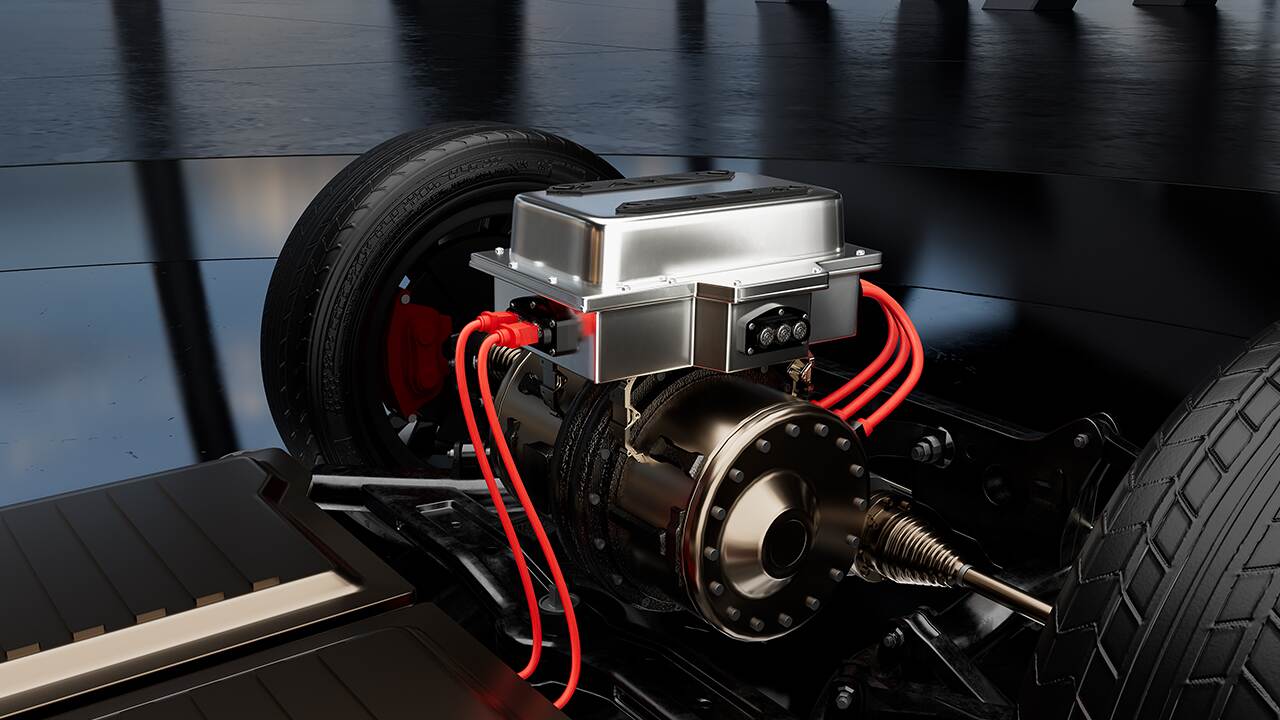
Texas Instruments (TI) has introduced the TMCS2100-Q1, the industry’s first multiaxial coreless Hall-effect current sensor specifically designed for all hybrid electric vehicle (HEV) and electric vehicle (EV) traction inverter applications. This innovative sensor offers a groundbreaking approach to current sensing by combining multiaxial measurement with a proprietary algorithm, effectively eliminating the long-standing trade-off between precision and system size in traction inverter designs.
Traditional current sensing solutions often force designers to choose between bulky, accurate magnetic core implementations and smaller, less precise coreless alternatives prone to displacement error and magnetic crosstalk. The TMCS2100-Q1 sensor addresses this challenge by measuring magnetic fields in both horizontal and vertical directions simultaneously. This multiaxial measurement technique achieves 20 times greater accuracy than existing single-axis coreless solutions, significantly reducing vibration-induced errors and enhancing the EV powertrain torque control loop.
This unprecedented level of precision, with displacement error as low as 0.25% at 0.1mm movement, is particularly critical as 800V architectures raise the bar for traction inverter accuracy. By enabling more compact and efficient traction inverter systems without sacrificing precision, the TMCS2100-Q1 empowers automakers to build HEVs and EVs with longer range, smoother ride quality, and more efficient motor control.
Specifications
| Product | Function | Sensing Architecture | Accuracy Advantage | Displacement Error (0.4mm) | Displacement Error (0.1mm) |
|---|---|---|---|---|---|
| TMCS2100-Q1 | Current Sensor | Multiaxial Coreless Hall-effect | 20× greater vs. single-axis alternatives | < 1% | 0.25% |
Key Features
- Industry’s first multiaxial coreless Hall-effect current sensor for HEV/EV traction inverters.
- Combines multiaxial measurement with a proprietary algorithm for enhanced precision.
- Measures magnetic fields in both horizontal and vertical directions simultaneously.
- Achieves 20 times greater accuracy than single-axis coreless alternatives.
- Offers displacement error of less than 1% at 0.4mm movement and as low as 0.25% at 0.1mm movement.
- Significantly reduces vibration-induced errors and minimizes magnetic crosstalk influence.
- Eliminates the need for busbar modifications, simplifying mechanical and thermal design.
- Enables smaller, more power-dense traction inverter designs without sacrificing accuracy.
Applications
- Hybrid electric vehicle (HEV) and electric vehicle (EV) traction inverter designs.
- Improving EV powertrain torque control loops for enhanced performance.
- Maximizing efficiency and power delivery in electric vehicle systems.
- Enabling the design of lighter and more compact traction inverter systems.
- Extending EV driving range and enhancing overall vehicle performance.
- Optimizing board space in traction inverter designs by eliminating busbar modifications.
- Achieving smoother acceleration and reduced motor noise for drivers.
Availability
The TMCS2100-Q1 multiaxial coreless Hall-effect current sensor is now available in production quantities upon request through Texas Instruments. Designed for HEV and EV traction inverter applications, the AEC-Q100-qualified device combines high-precision current sensing with a compact, coreless architecture, enabling more efficient and power-dense inverter designs.