Murata Launches Automotive Safety Certified Lead Type Disc Ceramic Capacitors
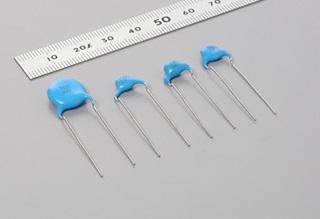
Murata Manufacturing Co., Ltd. has unveiled the DE5 series, a new line of automotive safety-certified lead-type disc ceramic capacitors. These capacitors have achieved X1/Y1 safety standard class certification, marking a significant advancement in the company's offerings for high-performance automotive applications.
This new series distinguishes itself from Murata's existing X1/Y2-certified DE6 series by providing an increased rated voltage and enhanced impulse withstand voltage. The DE5 series is designed to meet the evolving market demand for higher performance and greater safety margins, particularly in critical automotive systems such as on-board chargers (OBCs) in electric vehicles (EVs).
While Y2 class certification is typically sufficient for OBC applications, the DE5 series addresses the need for applications requiring superior performance or an additional safety margin beyond the 5 kV impulse test voltage rating of Y2-class components. By achieving the higher-tier Y1 class certification, Murata is contributing to the development of more robust and reliable electronic solutions for the automotive industry.
Specifications
| Product Series | Manufacturer | Certification Class | Rated Voltage | Impulse Withstand Voltage | Mass Production Start |
|---|---|---|---|---|---|
| DE5 series | Murata Manufacturing Co., Ltd. | X1/Y1 | 500Vac (r.m.s.) | 12kV | July 2026 |
Key Features
- Acquired X1/Y1 safety standard class certification.
- Lead-type disc ceramic capacitor design.
- Supports a Y1-certified voltage of 500Vac (r.m.s.).
- Achieves an impulse withstand voltage of 12kV.
- Designed for operation at higher voltages to meet market needs.
- Offers increased rated voltage and impulse withstand voltage compared to the DE6 series.
- Mass production is scheduled to commence in July 2026.
- Aims to suppress noise generated on commercial AC power lines.
Applications
- On-board chargers (OBCs) of electric vehicles (EVs).
- Power lines for suppressing noise on commercial AC power lines.
- Automotive applications requiring higher performance.
- Applications demanding additional safety margin beyond Y2-class impulse test voltage ratings.